
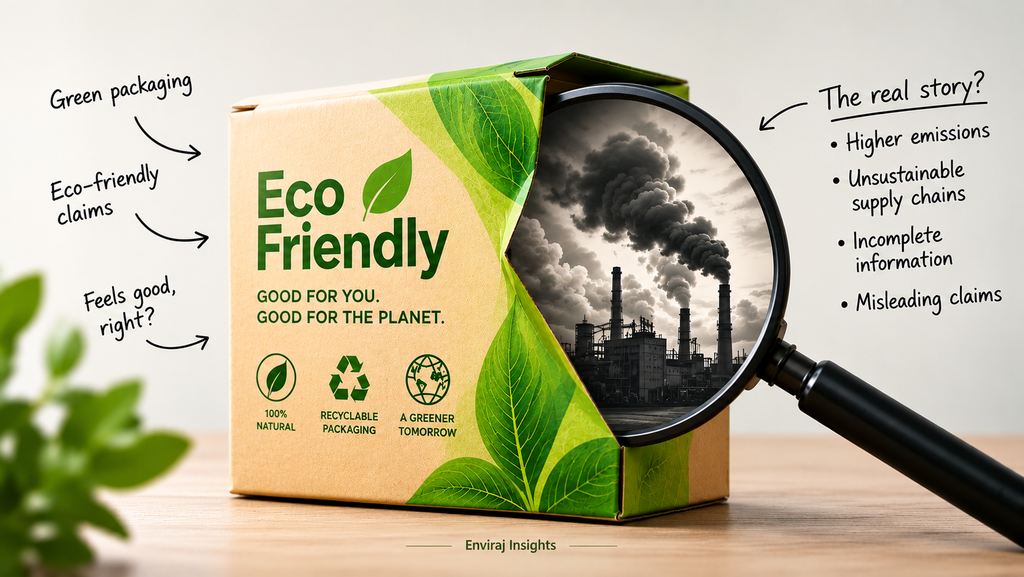
A product comes in green packaging, carries a leaf symbol and claims to be environmentally friendly. But does that actually make it sustainable?
Not necessarily.
Greenwashing happens when a company makes false, exaggerated or misleading claims about the environmental benefits of its products, services or operations. Sometimes the claims are technically true but leave out important information that could change how consumers perceive them.
As consumers become more environmentally conscious, green claims have become a selling point. The problem begins when marketing runs ahead of evidence.
Real-World Examples of Greenwashing
1. Fashion brands and sustainable clothing
In 2024, the UK’s Competition and Markets Authority (CMA) secured formal commitments from ASOS, Boohoo and George at Asda to improve their environmental claims.
The regulator questioned broad labels such as responsible, eco and sustainable, particularly when products contained limited recycled materials or lacked clear supporting information.
The companies agreed to make their claims more specific and transparent, without admitting wrongdoing.
2. Airlines and carbon-neutral flights
Can paying a small additional fee make a flight carbon neutral?
In 2024, the European Commission challenged environmental claims made by 20 airlines, particularly suggestions that passengers could offset their flight emissions through contributions to climate projects or alternative fuels.
The concern was that such claims could give travellers an inaccurate impression of the actual environmental impact of flying.
3. Recyclable packaging that rarely gets recycled
Imagine a company advertising plastic packaging as 100% recyclable.
The material might technically be recyclable, but what if local waste facilities cannot collect or process it?
In that case, the claim can mislead consumers by confusing technical recyclability with actual recycling. Whether it constitutes greenwashing depends on the specific claim, collection infrastructure and supporting evidence.
How to Spot Greenwashing
Five warning signs deserve attention:
- Vague claims: Words such as green, natural or eco-friendly without explaining what they mean.
- Missing evidence: Environmental benefits without measurable data, testing or credible certification.
- Selective disclosure: Highlighting recycled packaging while ignoring other significant environmental impacts.
- Misleading labels: Leaf symbols, green badges or certification-like logos without a verifiable basis.
- Unclear future promises: Net-zero or carbon-neutrality targets without a credible plan, timeline or measurable progress.
Not every environmental claim is greenwashing. A product can genuinely have lower environmental impacts without being completely sustainable. What matters is whether the company accurately communicates the extent of the benefit.
Is Greenwashing Regulated in India?
Yes. India’s Central Consumer Protection Authority (CCPA) introduced the Guidelines for Prevention and Regulation of Greenwashing or Misleading Environmental Claims, 2024, effective from 15 October 2024.
The guidelines require businesses to substantiate environmental claims with credible evidence and provide adequate disclosures. Broad terms such as green, eco-friendly and sustainable require appropriate qualifications and supporting information.
This means environmental marketing is not simply a matter of creative advertising. Companies must be able to support the claims they make.
What Should Consumers Look For?
Before trusting an environmental claim, ask three questions:
What exactly is better for the environment?
Compared with what?
And where is the evidence?
For example, “This bottle contains 50% recycled plastic” provides a specific, verifiable statement. “This is an eco-friendly bottle” tells consumers very little without further explanation.
The distinction matters because an environmentally preferable feature does not necessarily make an entire product sustainable.